Saturday, August 20, 2005

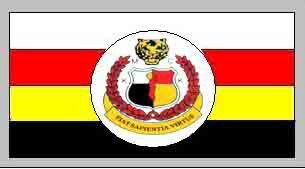
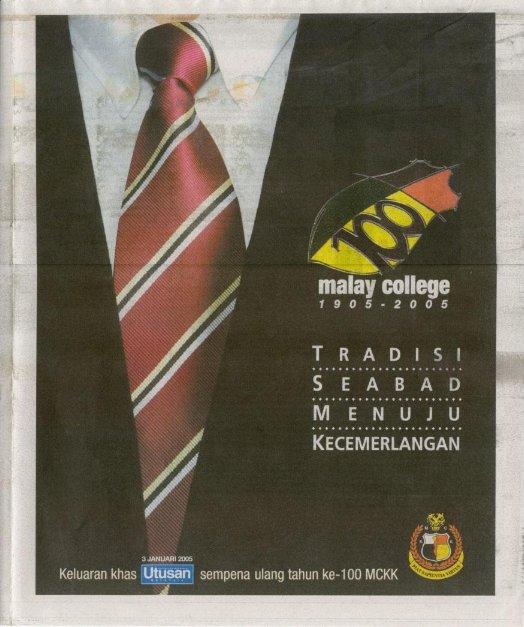
MCKK/MCOBA LOGOs...


nice logos. May MCKK live another 100 years to come so our children and grand children will be there to celebrate it in a more grandeur style.

I took the words below from the writing of an old boy, Raja Petra Kamarudin back in 2003;

Her Majesty the Queen of England once called MCKK “the Eaton of the East” when she visited Malaysia a couple of years ago. It is said His Highness the King of Malaysia then corrected her by calling Eaton “the MCKK of the West”. This, of course, cannot be confirmed but ask any “Old Boy” -- what an ex-Collegian is called though, let me assure you, none of these Old Boys act old -- and they would all agree that Eaton is what it is because they copied the traditions of MCKK.

The Battle of Britain was won on the playing fields of Eaton, they say. Well, Malaya’s independence was won on the playing fields of MCKK. As much as Malaysian Prime Minister Dr Mahathir Mohamad and UMNO try very hard to give the impression that Malaya’s independence was won due to UMNO’s struggle, what the history books fail to mention is that many of those “independence fighters” were products of MCKK. Granted it was a “peoples’ struggle”, but the rakyat, to quote Dr Mahathir, are like a herd. They just follow the leader, and it needed a leader to lead them to independence. And MCKK provided these leaders of independence.

I cannot resist mentioning that many of these early independence fighters like Sir Dato Onn bin Jaffar (Hussein Onn’s father), Dato Abdul Wahab (Dato Panglima Bukit Gantang and one time Menteri Besar of Perak), Dato Laksmana Razali, Tun Aziz bin Abdul Majid (one time Governor of Melaka), Dato Haji Kamaruddin bin Haji Idris (Dato Suhaimi’s father), Tun Abdul Razak (Dato Seri Najib’s father), Raja Sir Tun Uda (my grandfather), Dato Bahaman, Dato Andika Indera, and so on, were mostly old boys of the MCKK.

MCKK had become the seat of Malay nationalism. This was probably the biggest blunder the British ever made in Malaya. If R. J. Wilkinson was still around today, he would probably say, “Give the Malays education, old chap, and they start having VISIONS!”

Thursday, August 04, 2005

Another Car from China?


Here is another China make car err SUV that will enter Malaysia soon.

"JOHOR BAHARU, July 26 (Bernama) -- Syarikat LM Resources will set up a vehicle
assembly plant costing RM178 million at a 200-acre site in Bandar Penawar, Kota Tinggi.It will be the biggest vehicle assembly plant in Johor when operational from January 2007. The plant will assemble three models of vehicles from DADI Automobile Industry Ltd of China for the Malaysian market as well as those in Southeast Asia, West Asia, Europe and Africa.The three DADI models to be assembled initially at the plant are two sport utility vehicles called Shuttle and Tourer and a pick-up truck called Trekker."


Source Bernama http://www.bernama.com.my/bernama/v3/news_lite.php?id=147069

Sunday, July 31, 2005

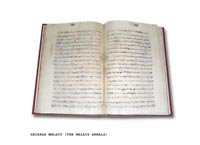
Sejarah Melayu (The Malay Annals)


I had a hard time in the last few months searching for The Sejarah Melayu or the Malay Annals. O Yes at last I found them in Dewan Bahasa bookshop.. the luxury version will cost me a bomb, what with leather bound et all, and the cheaper version are from the STPM series. Even then there are claims that the cheaper version may have differences in facts. So what is so special about the Sejarah Melayu?

Sejarah Melayu(Malay Annals) is clearly the most famous, distinctive and best classical Malay prose to be ever produced, sharing in the great literary tradition other Malay works such as the Hikayat Hang Tuah, Hikayat Raja-Raja Pasai and the Hikayat Merong Mahawangsa. It chronicles the establishment of the Malaccan sultanate, charting a course of more than 600 years in a solid compact book filled with intricate details regarding royal protocol, royal lineages, weaving in various historical, mythical and legendary figures and episodes in a compendium that still captivates its audiences three centuries later.

The Sejarah Melayu or Malay Annals are unique in that they constitute the only available account of the history of the Malay Sultanate in the fifteenth and early sixteenth century. They are in the nature of what may be termed as historical literature conveying a historical narration on the origins, evolution and demise of a great Malay maritime empire, with its unique system of government, administration and politics. The Annals have universal appeal as they relate to a major transformation in the lives of the people of the Malay Archipelago from a Hindu-Malay matrix to an Islamic – Malay culture. Being an entrepot port, Melaka made rapid progress on account of its cosmopolitan population comprising merchants from India, China, Arabia, Portugal and various other nations of the world. They contributed to the social, economic and political evolution of the Malay Kingdom.

The main theme of this work was to laud the greatness and superiority of the Malaccan state, which had been founded about 1400. Although the Sejarah Melayu mentions only one date, events described in it can be verified by other historical sources. The Sejarah Melayu consists of a collection of stories, not historically connected, focusing on the activities of the Malaccan sultans, their courts, and government officials. In addition, foreign rulers were also described, as were Malacca's foreign relations and its importance as a regional trading centre. A noteworthy omission was the absence of any mention of peasant life. The Sejarah Melayu is significant for its well-written narrative and characterization of personalities, and it is also an important historical source about Malacca and the Malay world prior to Malacca's defeat by the Portuguese in 1511.

Attributed to Tun Seri Lanang as its first editor, the work was commissioned by Sultan 'Ala'u-d-din Ri'ayat Shah of Johor. It was claimed to have been begun in on Sunday May 13, 1612, in Pasai, Sumatra, where the Sultan was being held captive Mahkota Alam of Acheh. However, some scholars think that the original text was written prior to 1536 and underwent changes in 1612.

The main aim of this work was, undoubtedly, to laud the spleandour, greatness and superiority of the Melaka Sultanate - and it was written at a time when the Johor court, successors of the Melaka sultans, were being attacked by Portuguese and Achinese, their capital sacked many times and having to be moved from one part of the Straits to another. The court was frequently on the run from marauding invaders, their territories being overrun. The Sejarah Melayu was probably an attempt by the Johor court to overcome its sense of lost fortunes by regaining the past glories of a mythical golden age that was less than a generation past. It still serves to inspire the Malay of today - and to remind them of the heights that they can be, and have been, capable of reaching.

source:
http://www.sabrizain.org/malaya/malays1.htm
http://www.britannica.com/eb/article-9066639

Saturday, July 30, 2005

From Seoul to Kota Kinabalu


stopped at KK on the way back to KL from Seoul

Final day in Seoul


The plane waiting to fly us back via Kota Kinabalu

The old and new Seoul railway station standing next to each other. Posted by Picasa

Friday, July 29, 2005

Happy Birthday To You


Birthday of my better half. Unfortunately this year I couldn't celebrate it with her as I was away in Seoul.

Photo: A restaurant in Goodview Hotel, Dong Guan ,China to remind me of her (beautiful hotel next to a lake)


German-Alles Gute zum Geburtstag!
Greek-Eytyxismena Genethlia! or Chronia Pola!
Gujarati -Janma Divas Mubarak!
Hawaiian-Hau`oli la hanau!

Is Happy Birthday Really Copyrighted?Yes.
The melody for Happy Birthday was first penned by two sisters from Kentucky, Mildred J. Hill and Patty Smith Hill. The song was called Good Morning to All, but bore the recognizable melody. The tune was first published in 1893 in the book Song Stories for the Kindergarten. The melody has since passed into the public domain, and is safe to hum in public without permission.
While it is not entirely clear who first wrote down the words for Happy Birthday, it showed up in a few places before Jessica Hill (another Hill sister) was able to demonstrate undeniable similarities between Good Morning to All and Happy Birthday and to secure the copyright to the song

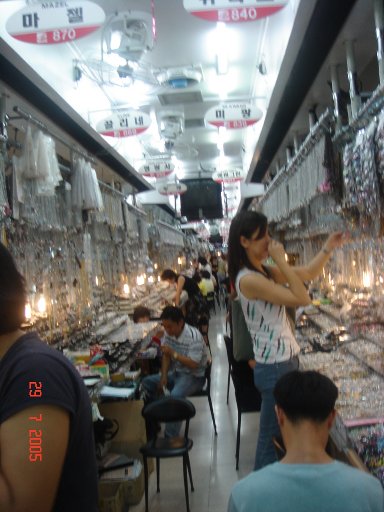
to NAMDAEMUN


our trip to the NAMDAEMUN (I believe it means South Gate, old gateway to Seoul) with Mr Park Jr and Mr Park Sr, and the famous Namdaemun Market, mak cik makcik from Malaysia will go crazy over the brooches, 1 big building selling brooches

Tuesday, July 26, 2005

Zhaoqing, Guangdong


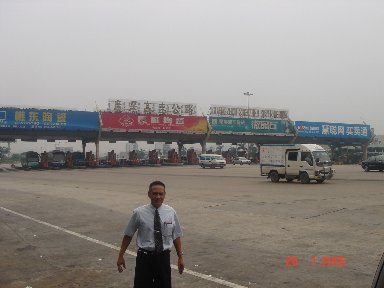
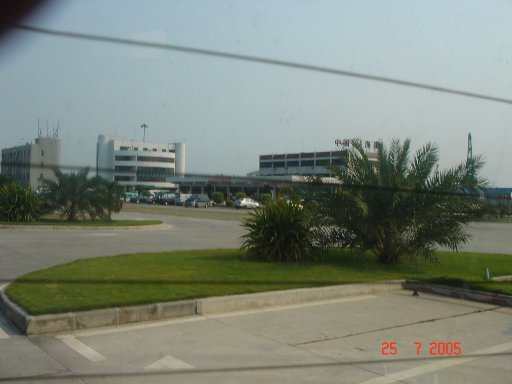
from Shenzen it was 3 hours by road to Zhaoqing.

Foto: 1,2. Hope Fortune Ltd factory, 3.toll plaza from Shanzen to Zaoqing

Monday, July 25, 2005

Shenzen


We arrived in Hong Kong and took a hydrofoil, something like a fast boat to Shenzen, my first time in China.
Photo: 1. Shenzen Port (entry point from Hong Kong) 2. Shenzen city skyline 3.Hang Sheng Electronics factory in Shenzen, 4. straight into the meeting room with them

Saturday, July 02, 2005

Enrique of Melaka : Was the first man to sail around the world a Malay

I read an interesting article reproduced here on the theory that a Malay and not Magellan was the first person toe sail around the world....who is this Enrique?

some answer from everything2.org
Enrique de Malacca, also known as Enrique Negro, Black Henry, or Panglima Awang, was possibly the first person to circumnavigate the earth.When he was a 13 year old boy, in Malacca on the Malaysian peninsula, he was captured and enslaved by Ferdinand Magellan, at some point around the year 1500. In 1519 Magellan's expedition set out to discover a route sailing west from Spain to the Moluccas, or Spice Islands. When the expedition reached the Visayan islands of the Philippines, Enrique was able to communicate with the islanders. Magellan was killed on the island of Mactan, betrayed by the Spanish officers in his service. Enrique then betrayed the officers to Humabon, Rajah of the neighboring island of Cebu, and jumped ship. The question is, did Enrique know the language of the islanders, or did they know Malay, a popular trade language? The impression from Pigafetta's journal is that Enrique was communicating fluently with the islanders of Cebu. If this is true, it's possible that he, not Juan Sebastian Del Cano, Antonio Pigafetta, and the other 16 survivors of the expedition, was the first to go all the way around the world. http://everything2.org/index.pl?node_id=1103828

Photo:Magellan, from acontemporary painting


Over the years, there has been considerable debate about who actually was the first man to sail around the world. We were all taught this historic honour belongs to Ferdinand Magellan (Fernao de Magalhaes, in his native Portuguese)who led the expedition of five ships and over 270 men out of Spain in 1519 and sailed westwards, reaching the Philippines, where he was killed. However, Magellan was thought to have travelled to as far as Sabah before, and one can argue that he had indeed actually completed circumnavigating the globe. Thereare also those who argue that the accolade should rightly belong to Sebastian del Cano, a mutineer from Magellan's crew, who led the one surviving ship, Victoria, and 17 other men, and limped back to Spain on September 8, 1522.

However, only one individual can truly claim to have been the first man to leave his home, sail around the globe and arrive at a part of the world where his mother tongue was spoken. That man was a Malay, Magellan's able servant and interpreter, called Enrique of Melaka or Henry the Black.

If there is any single Malay ever who has had the greatest impact on world history, it would probably be Enrique and we know so little of the man. He is called Panglima Awang in Malay literature but there is no mention of him in any credible Malay historical records. There is brief mention of Enrique in the official Spanish crew lists, as well as Magellan's last will and testament. Almost all of the certain facts that we know of Enrique come from the most comprehensive chronicle of Magellan's voyage, the narrative by Antonio Pigafetta, an Italian volunteer who joined Magellan's crew.

Pigafetta does briefly mention Enrique's origins - he was a Malay who had lived in Melaka but was originally from 'Zamatra' (Sumatra). Magellan was among the crew of the Portuguese squadron of five ships under Diego Lopez de Sequeira which sailed into Melaka on September 1, 1509, and became the first Europeans to have contact with the Malay Peninsula. Magellan also took part in the capture of the city by the Portuguese in 1511 and it was probably then that he acquired a Malay slave, whom he gave the name Enrique.

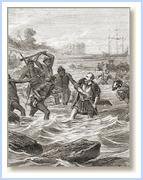
Photo:The Death of Magellan, from
a 19th century illustration

The young Enrique may have been about 18 at the time - Magellan's will and testament made eight years later cited Enrique as being "of the age of twenty-six years, more or less". The will also stated specifically that Enrique was a "captured slave" - indicating that Enrique was not bought in a slave market by Magellan. There were thousands of slaves in Melaka belonging to the merchants and Malay nobility, and Portuguese records indicate that Sultan Mahmud of Melaka alone had over three thousand 'hambarages' ('Hamba Raja' or royal slaves). Many were in fact prisoners of war brought back from Melaka's successful campaigns against the kingdoms of Sumatra, Enrique's birthplace.

Enrique must be a guide and interpreter when Magellan travelled to different parts of the East Indies after Melaka's capture, reaching as far as Sabah. He then sailed back to Lisbon in 1512, with his loyal Malay servant in tow, and was dispatched to the Portuguese campaigns against the Moors in Morocco. Magellan was later accused of corruption left the service of the King of Portugal and offered his services to King Charles I of Spain in 1517. Magellan presented the King of Spain with his plan - to find a route sailing westwards to the Spice Islands, avoiding the Portuguese. It is said that he even had Enrique presented to the King to convince that he a man with the local language, knowledge and experience will make the voyage a success.

Magellan later declare in his will and testament that, upon his death, Enrique “shall be free and manumitted, and quit, exempt, and relieved of every obligation and subjection, that he may act as he desires and thinks fit.” Magellan even left Enrique a comfortable share from his estate, “the sum of ten thousand maravedis in money for his support”

The Spanish king agreed and Magellan was provided with five sailing ships - San Antonio, Conception, Victoria, Santiago and his flagship Trinidad -
and crews comprising over 270 men. They left the Spanish port of Sanlucar de Barrameda on September 20th, 1519 and began the daring and historic voyage of exploration ever - a voyage equaled to Man's landing on the moon 450 years later.

Across the Atlantic, down South America and across the Pacific, they sailed and finally, on March 16th , 1521 they sighted Samar, the most easterly of the Philippine islands. But on March 28th, a momentous event occurred. Pigafetta wrote: “.... we saw approaching two long boats, which they called Ballanghai, full of men, and in the larger was their king seated below an awning made of mats. And when they came near the captain's ship, the said slave (Enrique) spoke to that king, who understood him well.”

As they continued their voyage to the surrounding island kingdoms, it was Enrique alone who, on behalf of Magellan and the Spanish crown, spoke with kings and traders. Magellan had befriended the ruler of Cebu, Raja Humabon and was asked to punish rebellious natives in Mactan, under a warrior named Lapu Lapu. On Saturday, the 27th of April, Magellan attacked LapuLapu's with 60 men-at-arms - cannon, muskets, crossbows and steel swords against bamboo spears and poison-tipped arrows. But the small Spaniard force suddenly found itself overwhelmed by over 1,500 of Lapu Lapu's warriors.

Pigafetta noted that Lapu Lapu's men were converging their attacks on the Spanish captain himself - Magellan was first struck in the right leg by an arrow and later a spear stabbed him in the arm. For some reason, his cannon had now stopped firing and, despite being pressed by attacks for nearly an hour, no reinforcements had arrived from his waiting ships. Wading knee-deep in the surf, he was finally pierced by a spear in the right leg and he collapsed face down dead.

Enrique himself was wounded in the battle. Pigafetta writes that “he no longer went ashore to do necessary business but was always wrapped in a blanket” A new commander replace Magellan - a Portuguese by the name of Duarte Barbosa. Shouting at Enrique, Barbosa told him that although his master was dead, he was not to be freed but was to remain a slave.

Pigafetta writes that Enrique went ashore and told Humabon that the Spaniards were about to depart immediately “but, if he would follow his advice, he would gain all their ships merchandise ... and so they plotted a conspiracy.”

The next day, Enrique told the Spaniards that Humabon had prepared jewels and presents asked them to come ashore to receive these. A party of Spaniards led by Barbosa did come, accompanied as usual by Enrique, but they were attacked. A lone survivor fled back towards the ships and, when asked if there were any others who survived the attack, he said all were dead, except the interpreter, Enrique.

Official Spanish records list Enrique of Melaka as one of the 27 men massacred in that attack, so we really do not know if Enrique did survive that attack, as Pigafetta claims. What we do know is that was the last we hear of Enrique in Pigafetta's diary - and he disappears into the mists of history. If Enrique had indeed made his way home from Cebu he would be the first man ever to have sailed around the world, rather than Magellan or del Cano.

One could also argue that the Spaniards may have indeed changed the official crew lists to ensure that this was not a possibility - how could a Malay slave have beaten the flower of Spanish manhood in the race around the globe? Certainly, Enrique was to be just a footnote to the heroic deeds of Magellan and del Cano that were told in countless books about this remarkable voyage written over the next few hundred years. Little was known about him even in Malaya until, in 1958, the writer Harun Aminurrashid published one of the greatest historical novels in modern Malay fiction, "Panglima Awang".

Despite Pigafetta's quite clear statement that he was from Sumatra, Filipino writers and historians are now claiming Enrique as one of their own countrymen. The most convenient feature of these theories is that if Enrique was indeed from Cebu, that would without any doubt make a Filipino the first man to have sailed around the world.

The main argument behind these theories is that Enrique could speak in the language of the people inhabiting the islands around Cebu - Bisayan - and therefore must have been from Cebu himself. There is a fatal flaw in this argument - Pigafetta's narrative above does show that Enrique could not communicate at all with the natives in his first encounter with them. It was only when he spoke with royalty - in this case, their king - or with traders that they suddenly found a common language among them. This is certainly not surprising - Malay was, by then, the 'lingua franca' of the whole Archipelago, and the official language of international diplomacy and trade for the whole region. All references to Enrique in Pigafetta's chronicle have him speaking with kings, chiefs or traders - rather than the common folk who may not have known the international language of Malay.

Enrique of Melaka had sailed the seas of the East Indies with his master; followed him across the Indian Ocean and around the rim of the African continent; loyally fought alongside him in North Africa; lived in the splendour of the royal courts of Portugal and Spain. He embarked upon the greatest adventure ever - to circle the globe, the final frontier; to explore strange new worlds; to seek out new life and new civilizations; to boldly go where no man has gone before.

Having done that, he had returned full circle, to a land where he could understand the people and they could understand him. And there is just still the possibility that this humble Malay slave was indeed the first human ever to have sailed around the world.


Pigafetta, Antonio, journal, quoted in Skelton, R.A., 'Magellan's Voyage--A narrative Account of the First Circumnavigation', New Haven: Yale University Press, 1969
Zweig, S. Magellan. 'Der Mann und seine Tat', Wien-Leipzig-Zürich, 1937 and Fischer Taschenbuch Verlag, 1983
Pintado, M J, 'Portuguese Documents On Melaka', National Archives of Malaysia, 1993.

for more details please follow this source: http://www.sabrizain.org http://www.sabrizain.org/malaya/port3.htm

Wednesday, June 22, 2005

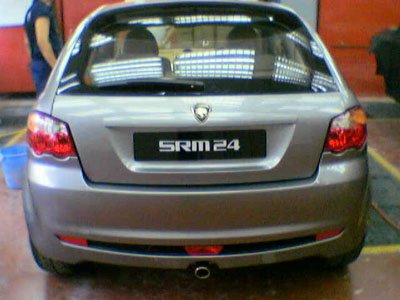
The NEW Satria?


Received this sometime ago, Satria Replacement Model or codename SRM24. Rumours are going around that the launch for this car has been postponed to early 2006. I like the rear styling, much much better than the SAVVY, I wonder though what price range will it be in, RM50k-RM55k I guess.

Saturday, June 11, 2005

Malaysia has a lot of use for that school in Kuala Kangsar


Malaysia has a lot of use for that school in Kuala Kangsar
[Berita MCOBA Vol. 2 No. 1 March 1991]by Rehman Rashid

You and I, fellow Collegian, are part of the ‘Malay College Mafia’ that’s being whispered about these days. Indeed, the Malay College Old Boys’ Association has become the nearest thing to a masonic lodge this country’s ever known outside the Chinese clans. MCOBA is a code with special access into every corner of governance in Malaysia: the government, the civil service, the private sector, academia, the palaces, everywhere. Old Boys of the Malay College can be found among the country’s foremost politicians, administrators and businessmen, bankers, doctors, lawyers and engineers. It remains the school of royalty. Not because the sons of the Sultans still study there – they do not, for valid enough reasons – but because their fathers once did.

The Malay College stands tall in the national conscience – even, perhaps especially, among those who never went there. Abdul Kadir bin Jasin, Group Editor of the New Straits Times, recently wrote about his feeling of inferiority at not having attended
one of the nations’ top residential schools: you’re not so eager to tell people where you went to school. But even a char koay teow seller is elevated by being an alumnus of the Malay College. (Yes, it remains possible to be an MC Old Boy and never know wealth or position. We are not all as rich and powerful as the richest and most powerful of us are. But the qualities remain the same. Diamonds in the dust sparkle just as brightly as those on a crown. Or a Rolex.)Why? Simple: Because MC was a good school, enrolling the best of Malay youth, having them live and compete with each other as equals, giving them good teachers and splendid playing fields. But let’s see what this means.

Let’s attempt a definition:The Malay College is the most important school in
Malaysia, because it’s the most important school for the Malays. Unconscionable arrogance? Of course. It is a grotesque overstatement of the point: the greatest strength of the Malay College is that it teaches pride. And pride is the one thing the Malays have been striving throughout history.

The NEP is about nothing else. It is simply today’s stage of the process that began
with Onn Jaafar cycling through the hinterland in 1946: the crusade to lift the
Malays out of their humble, dispirited, apathetic inertia and ensconce them on a
plane of dignity in their own country – a country that they had never been able
to save from foreign conquerors. The Portuguese, the Dutch, the British, the
Japanese, the British again... oh those damned British ! ...And now the Chinese,
whom too many Malays remain wary of regarding as fellow countrymen. Today’s Malay political ethic – and this feverish battle for dominance- stems from there having nothing but humiliation in the past five hundred years of Malay history.

And what was Parameswara himself but a fleeing refugee from Temasik.
The Malays of Malaysia have no heroes to compare with the national deities of
Indonesia, for example. (Indeed, for the example that matters most.) We have no
Iskandar Thani, no Cut Nyak Dien or Singgamarajah. No Hatta or Sukarno or
Kartini. No martyrdom ever bloodied our soil, no valour stood triumphant in war.
Why else this endless fuss about Hang Tuah and Jebat, a pair of melancholy
poseurs with long libidos and short tempers?

The Malay concept of heroism is fatally flawed in this one regard: it celebrates the defenders of the throne, exalting loyalty, and not the focus of the loyalty: the throne itself.

History reserves heroism for conquerors, regardless of whether they are
brutal or enlightened. But the various Malay States were never united under one
emperor king; on the contrary, they were fromed in the dissolution of the
biggest single Malay state in our past – Malacca – and spent their subsequent
sovereignties squabbling. What we long to remember as the Golden Age of the
Malays was in fact a drawn – out decline. We were never conquerors, only the
conquered, and that galls many Malays today
. Hence this political obsession with the need to be vigilant against losing everything to the Outlanders. Ensuring
Malay pre-eminence – cultural, linguistic and parliamentary – is the central theme of Malay politics. It is really the fear of Malay eclipse; hence the durability of Hang Tuah’s famous utterance about the Malays never vanishing from the world.
The Malays’ greatest weakness is their sense of weakness. The aggressiveness now associated with Malay leadership stems from an ingrained inferiority complex. ("You don’t know what it’s like," Dr. Mahathir once told me in a recorded interview, "to be considered on par with dogs and other animals.")This is not a common weakness, however, among those who went to Malay College.

The Malay College was singularly effective in curing its students of their sense of inferiority. Since its earliest years, the school has brought together young Malay men from every state, rich and poor, aristocrats and commoners, and educated them to the highest standards expected of them. In the process, three important truths were revealed to every boy who went to Kuala Kangsar on his first journey away from home and family:

First, intelligence had nothing to do with birth or breeding.
Second, there was indeed a unity of Malay states.
Third, education was synonymous with leadership;
there could not be one without the other, if either was to be done right.

In teaching them to respect quality, ability and excellence (and having it proven year after year in examination halls and on playing fields alike), the Malay College raised its boys to see themselves as equal of their country’s greatest conquerors. The English-ness of the Malay College – all that Eton-of-the-East business – reached
its height in the Forties and Fifties, when the Fives Court was actually in use. Old Boys of that vintage must look back at their youth with a mixture of fond nostalgia tinged with a little embarrassment at those very pukka times. (In William Shaw’s biography of Tun Razak, there is a 1948 photo of Tun and a few friends in London. In stylish tweed suits they elegantly pose in St. James Park, each of them holding a pipe in the style Sherlock Holmes made famous.) But the Anglicisation was never quite as complete as it may have seemed to passers-by on Station Road or the Strand. For one thing, these were intelligent and well-educated young men, living in the heart of Empire during a time of great global change and intellectual energy. Giants walked the earth: the Churchills, Roosevelts and MacArthurs of the West giving ground to the Gandhis, Nehrus, Sukarnos, Chou En Lais and Ho Chi Minhs of Asia, as the British Empire,blown to smithereens by the Second World War, crumbled before the rising tide of history. To be young, bright and Malayan in London at such a time must have been to feel part of a great rebirth: to be the fledgling leaders of a new world of many nations where once there were only the empires of a few.And there
was something else, too, that served to continually remind these young, elite and English-educated mean of their Malayness. "You felt like a fool at their parties," says one who remembers, "standing around with your orange juice while they were all drinking gin and tonics and talking to themselves."

What was irritating about this was not the inability to do everything the British way, but the perception that the British would always look down on those who did not. This irritation has persisted, because the British are notoriously slow to relinquish their historical pride, and we are notoriously slow to acquire ours. I believe this explains Dr. Mahathir’s remarkable campaign to settle scores with the British the moment he became Prime Minister. The Carrington snub, the Buy-British-Last policy, and the final triumph of his first official visit to Britain in 1987: the attention of Mrs. Thatcher and instant tickets to a West End musical with a six-month-long waiting list. Ironically, those Malays of Mahathir’s generation who received a British education are less impressed by Britain’s standards. Those educated at the Malay College began meeting those standards at the ages of ten or twelve.

When you know you are the equal of your conqueror, he is your conqueror no longer. He may be big, you may be small, but you both know your minds are equal. So you set aside the machinery of conquest, tell your bodyguards to wait outside and keep the peace, and start using your brains. You talk, negotiate, deal for what you both want. When your negotiations are successful, you know you have moved beyond barbarism. You are civilised men. The architects of Malayan Independence were conquerors too. But their weapons, with which they regained a country that had been lost to us for 450 years, were ideas. Not the Tamingsari, the kris of Hang Tuah, that ubiquitous symbol of Malay power; which as recently as October 1987 was still being proclaimed thirsty for Chinese blood. There were Malays among those men of Independence, as there were in the highest echelons of the first national administration of Malaya. Many of them were Old Boys of the Malay College. But because MC was founded to create an administrative elite, and because that ethic predated the emergence of politics in this country, relatively few
Old Boys have become politicians. The persistent need for ‘grassroots’ support
is partly to blame – College boys have long tended to leave their kampungs
behind once they’ve been through Prep School. Also, I feel, Old Boys are
inherently uncomfortable with the premise that political power is the only
defence against the Chinese because they’re shrewder, smarter, harder-working
and generally better than the Malays at everything else. College boys tend to
consider themselves capable of being as shrewd, smart and successful as anyone.
They’ve been taught to believe they can do anything as well as anyone and God
knows better than most.

Those who regard the Malay College as a self-important bastion of neo-colonialism despise us for this. They see the Malay College as having done nothing but turn out generations of smug Anglophilic Melayus sneering at their peasant ancestors, while the foreigners were freely looting their lands. Malay College boys may have thought they were the leading edge of their people, but in fact they were leaving their people entirely behind. It is not an invalid view. But I prefer to regard those cocky brown men with their clubby English accents, proudly wearing their little white wigs at the Inns of Court, as having learned how to negotiate the return of a purloined booty. The crowning moment of that skill was, and remains, Merdeka Day 1957. But fundamental to Independence was the success of the UMNO-MCA-MIC Alliance. Independence could not have been won without the political linkage of the Malays, Chinese and Indians of Malaya. Negotiating that
linkage could only have done by the top men if each community, those versed in a
common voice. Speaking on behalf of the Malays, ensuring their primacy in the
Alliance and laying down so strong a defence that Malay political pre-eminence is today unchallenged, were many Old Boys of the Malay College. One of them, Abdul Razak bin Hussein, will be remembered as Malaysia’s first truly significant Prime Minister. Tunku Abdul Rahman, Bapa Malaysia, was an appointed representative. He was so full of happy linkages. A royal prince chosen by his people, fond of the Chinese and Indians and accepted as the best possible interface between them all. Tunku was legendary for being the most Anglophile Malay of his time – a dilettante aristocrat with a fondness for sports cars, horses and English university towns in autumn.

Tunku’s premiership was as the Chief Malayan Witness to the end of Empire. He was a sweet, gentle and hopeful way to say goodbye to the old order. It was left to Tun Razak, Bapa Pembangunan, to design the blueprint for the new.
And how’s this for iron: The NEP, designed to elevate the Malays, was responsible for the rapid decline of the Malay College, which had done so much to make the NEP possible. In an astonishing display of wrong-headedness, the qualities of the Malay College were deemed detrimental to Malay pride.

I was still at the College in the early Seventies, when the Education Minister at the time, Musa Hitam, declared "elitism is out". (The statement was made in Hargreaves Hall, during that year’s Speech Day. Musa had prefaced it however, with the statement that he had always wanted to attend Malay College, but had to settle for Johore’s English College instead.)"Elitism", in the sense Musa intended, referred to the grooming of a few selected Malays to stations above the mass of their people. This was apparently unjust. The Malay College had to be no different from other schools. Had that signified an intention to raise all schools to Malay College standards, it would have been laudable (if a bit far-fetched). But the most important thing was uniformity, "equal opportunities," and if other schools could not be raised to the stature of MC, MC would be lowered to the level of other schools. And then Headmasters began coming and going every couple of years, and the turnover of teachers trebled. Times changed very rapidly. Today the College no longer has a Sixth Form, (for reasons brilliantly perceived in a prescient essay by Ramli Mohammad in the College Magazine, Vol. VII No.3, 1973.) Standards declined precipitously. Because they were doing so across the board in Malaysian education, which was struggling to accommodate the new expectations of the NEP, the College retained its reputation as one of the best schools in the country. But that was relative to other schools, and not to the standards the College had traditionally set itself. Now, after nearly twenty years and the active involvement of MCOBA, the decline has been arrested.

We now hear the Sultan of Kedah call for the formal recognition of the College as a leading institution. An adulatory story on the College appears in the ‘Tatler’, of all places. And the ‘Malay College Mafia’ is now perceived as increasingly influential at all levels of Maalysia’s government and economy. ‘Elitism’, it would appear, is back with a vengeance. But then it had never gone away. What was once decried as ‘elitism’ the elevation of some above others – is now recognised as the process by which leaders emerge. As long as a nation needs leaders there will be a need for schools in which good minds are encouraged to reach for glory, recognising no limits to their potential other than those imposed by decency, discipline and compassion for the less favoured.

The Malay College has traditionally turned out men with a sense of responsibility to things greater than themselves, which is perhaps another reason for MCOBA’s rosters being notably short on politicians. But not on managers (a category in which I include all good businessmen, administrators and successful people in general). Successful management requires copious measures of the qualities MC has been known to cultivate: a vision of the Big Picture, and understanding of hierarchies and networks, a keen sense of identity and much self-confidence.

Good management is impossible without such qualities, but the worst management emerges when those in authority know they are not there because of their professional competence. This is why there are pejorative overtones to the word ‘elitism’ – it can also mean elevation for reasons other than ability and merit.
Such positions are political, and those occupying them know that their tenures have little to do with how they do their jobs. This is a fearful state to be in, and doing their jobs becomes secondary to serving the connections that are keeping them there.
I see this as part of the reason for the mediocrity that has come to afflict so many Malay ventures in both the public and private sectors. Success can only be measured in merit. That is as true in management as it is in the classroom, exam hall or on the running track – or Benches of Parliament.

The NEP may be a step towards leveling the playing field for a true meritocracy to emerge in Malaysia, at which time the Malays can be said to have ‘arrived’. But while anxious gazes are fixed on the future, many seem to have forgotten that the Malay College has been a meritocracy since its inception. Thanks in part to schools like MC, the Malays are not entirely alien to success honestly earned and well deserved. Out of that comes pride, and out of that pride comes the confidence the Malays need if they are to negotiate constructively with their fellow countrymen –
especially those their politicians claim to distrust and fear. Much of that fear is cynically inflated for the sake of ‘Malay unity’, but it is nonetheless rooted in that damnable inferiority complex. That fear, while doing obviously nothing for Malay unity, has earned us the scorn of the non-Malays. But when the Chinese in particular realise that the Malays have begun losing their fear of being economically stripped, and are instead ready and able to deal intelligently with their partners as equals, there will be a burgeoning of opportunities to do so.

This allows me to end this discourse on an optimistic note, for I believe the process is well underway. We can be certain that in boardrooms and corner office suites across the region, exemplary Malay executives, intellectuals and professionals are doing the talking on behalf of their people, thinking well, speaking intelligently and looking good; making the Malays look good and winning the confidence and respect of their
partners.

We can also be sure that some of them are known to wear a certain striped tie on Wednesdays, deriving from that one item of apparel all the evidence they need of their capacity for success.

It would be nice to hope there are some politicians in them.

source:http://us.geocities.com/mckknet/article-13.htm

Thursday, June 02, 2005

history of Malaysian flag


well some people may not know where do we get our flag from, so here goes:

Description
In 1950 a new flag was introduced: the basic design is that preserved in the
modern flag, but 11 stripes and an 11-pointed star, representing the number of constituent states. In 1963 three more states (Sabah, Sarawak, and Singapore)joined the federation and country's name changed to Malaysia. The common explanation for the addition of the 's' in the name is that all three new states start with this letter. The number of stripes on the flag was increased to 14 as was the numbers of points on the star.The flag of Malaysia is a combination of traditional Islamic symbols and the Stars and Stripes. The 14 stripes and the 14 points of the star represents the 14 member states and the crescent and star represents the dominant religion Islam. The blue canton stands for affiliation to the Commonwealth. The dimension of the flag is 1:2.
Jan Oskar Engene, 24 June 1996

The old Malayan (for the Federation of Malaya) flag was similar to the present day Malaysian flag except that the star and the stripes were 11 for the 11 states of Peninsular (or West) Malaysia. The flag was changed with the creation of Malaysia in 1963.
Thomas W. Koh, 14 May 1997

History of the Flag
The flag was chosen by a body established in 1949 to choose a flag for the Federation of Malaya. A competition was held by the Federal Legislative Assembly, in which 373 entries were submitted of which 3 made it to the final stage. The first design was a badge of crossed kris circled with 11 five-pointed stars. The second design was similar to the first, except that the 11 stars were arranged in two circles around the crossed kris. The third design was 11 blue and white stripes with a yellow moon and star at the hoist.

The Malay Mail surveyed public opinion, and on 28/11/49 published the result, i.e. a majority for the third design, the creation of a government architect from Johore, En. Mohd b. Hamzah. With a few amendments the flag attained the support of the Council of Rulers on 22/2/50 and on 19/4/50 the Federal LegCo passed a motion That in the opinion of this Council the Flag of the Federation of Malaya should be as follows:- Eleven horizontal stripes alternately red and white in colour, the uppermost stripe being red, having a blue quarter with a crescent and eleven-pointed star in yellow superimposed, the standard size of the flag to be six feet by three feet.

The design was approved by HM King George VI on 19/5/50, and the flag was first flown at a flag-raising ceremony held by the British High Commisisoner on 26/5/50 in the compound of the Sultan of Selangor's palace, attended by TH the Rulers of the Malay States and British officials.
Andrew Yong, 15 August 1999


sourse http://www.crwflags.com/fotw/flags/my1950.html

Sunday, May 29, 2005

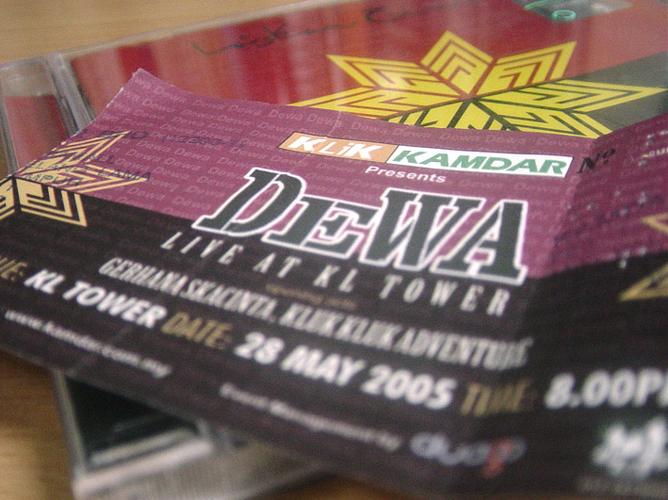
Dewa rocks crowd at KL Tower


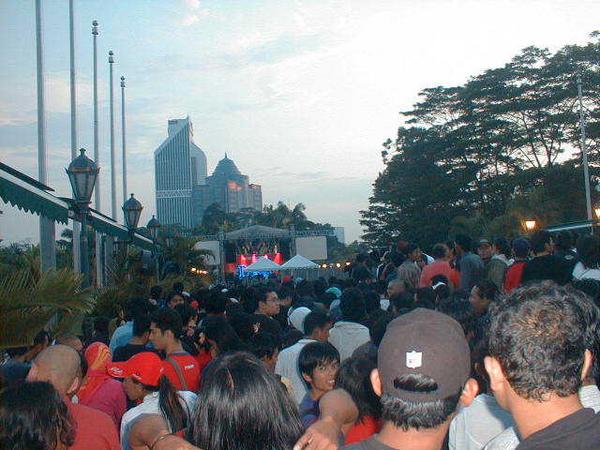
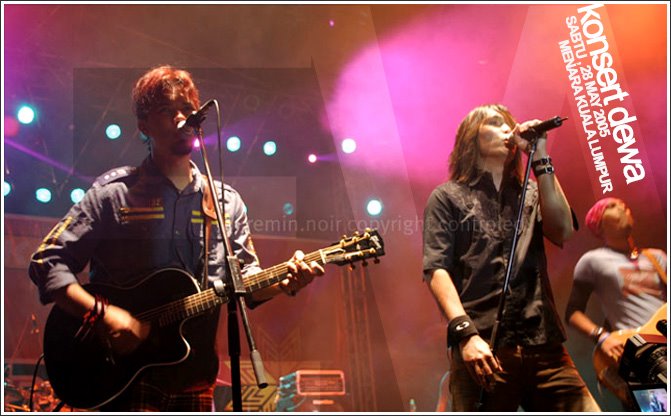
It was pandemonium at KL Tower in the heart of the capital last Saturday when more than 6,000 fans crammed into the crowd space right underneath the tower to watch Indonesia’s Dewa live in concert. I thought my Mrs and myself could be the oldest couple in the crowd. Good to see that we have a few other senior fans as well.
Without contest, Dewa is the greatest rock group to come out of Indonesia in the last decade. Those million-selling albums Bintang Lima in 2000 and Cintailah Cinta in 2002 tell only half the tale of this enigmatic band – renowned for trailblazing music, outspoken politics and the occasional brush with controversy. In Malaysia, Dewa’s adulating devotees (or baladewa, the band’s official term of endearmenr for its fans) have come to rival any in the region, with the popularity and impact of their most recent albums winning over lifelong Malaysian fans.

Dhani, the band’s founder, cemented his reputation of being Dewa’s creative catalyst and ringleader in concert as he alternated between singing lead vocals, enthralling the audience on his favoured keyboards and keeping time on the acoustic guitar. Along with Once and mysterious lead guitarist Andra Ramadhan (who was Dewa’s Joe Perry to Once’s Steven Tyler onstage), it was this triumvirate that kept the crowd transfixed throughout Saturday’s show. Anchored by bass player Yuke and drummer Tyo Nugros, the robust Dewa showed why it was a band synonymous with sold-out concerts. One thing to note: The venue sucks... how could you put thousands of screaming fans on that small piece of shit in front of KL tower, and the stage is too damn low. Pity those cewek pendek who can't see the band.

Roman Picisan; Bintang
Lima
;
Ciptaan :Dhani

Tatap matamu bagai busur panah
Yang kau lepaskan ke jantung hatiku
Meski kau simpan cintamu masih
Tetap nafasku wangi hiasi suasana
Saat kau kecup manis bibirmu

Cintaku tak harus,miliki dirimu
Meski perih mengiris-iris segala janji
Aku berdansa diujung gelisah
Di iringi syahdu lembut lakumu
Kau sebar benih anggun jiwamu
Namun kau tiada...menuai buah cintaku
Yang ada hanya sekuntum rindu

If They Would Only Stop Putting Those Ugly Ties On


Somehow I always like this article. I guess it represent the views of most adult who sees someone wearing that ugly maroon tie. As for me, I used to wear it without fail every wednesday during those days when I frequently go up and down MINDEF ( Ministry of Defence). Just to rub it on those OP (Old Putra) blokes. At least I get to know a few of them when we were stuck in the lift. Its something to start a conversation. Well the OP and the friends of this Jockstrap guys are not all bad. We do get along well, at the end of the day I believe our aim is similar......

If They Would Only Stop Putting Those Ugly Ties On [STAR86 Online]by Jockstrap Giles

It is a bit sad that these old MC sods have the weekly need to wrap a piece of striped rag around their greasy necks just to tell the world that they all spent their pathetic pubescent years in one same place. We would naturally then be compelled to presume that their lives have been shamefully reduced to such ugly ties, which incidentally went outdated the last time a Hanoverian sat on the Throne.

Funny thing is, without those moth-eatened ties around their dirt-stained necks, they can be ironically tolerable. When I took those momentous steps down the matrimonial aisles, my Best Man was an old MC type. And I was even called upon to be the best man for two of their kind. My regular Friday Prayer / Lunch Chum is also one; and depending on circumstances, we are sometimes joined by another one or two (along with some Old Grand STARians). Then there is this kilogramme-endowed mass of a bloke with whom I share the passion for intellectual wit and during my bachelor days of yore, very non-intellectual audio-visual materials.

Perhaps some twist of Fate dictated that the food and quasi-drinking water which were forced down our throats in Ipoh and KK actually came from the same source -therefore some of them get along well with some of us. Just as long as we don't bump into them on one of their Ugly Tie Days. I'm certain that even if G. Versace had the chance, his fashion instinct would have told him not to go to MC. Then again, his hormonal instinct most probably would!

But just imagine, if only those tie straps were spaced out a bit, and alternated with rows of majestic badges, they would be quite a classic.

Thursday, May 19, 2005

Gina Lazenby


yes I used to work for her, finishing her accounts and taxes sometime back in 1993-94 back then her office was in Central London. I met Mr Anthony Robbins through her, he was one of her good friend. She was one of the first few mat salleh into Feng Shui and now she is the founder of the Feng Shui Society.

Gina Lazenby is an award winning business woman who following many years of success running her own marketing consultancy embarked upon a decade-long search for the lifestyle and habits that would support positive health. As well as writing The Healthy Home she is the author of The Feng Shui House Book and Simple Feng Shui .

Friday, May 13, 2005

"May 13 - Before and After"

"May 13 - Before and After"Excerpts of this book by (the late) Tunku Abdul Rahman, then Prime Minister of malaysia, published in September 1969
"Victory" on the rampage
No one was more surprised, I am sure, than the DAP and the newly-formed Gerakan with their unexpected successes. They felt not only cocky, but downright arrogant. They lost no time in arranging to celebrate their "victories." Dr. Tan Chee Khoon, who won his seat in Batu Selangor, with a big majority asked for Police permission to hold a procession by members of his Gerakan Party. A permit was granted on condition that it followed a route authorised by the Police. (On 12th May) Dr. Tan's victory procession was held on an unprecedented scale, politically speaking, and was accompanied by acts of rowdyism and hooliganism and in utter defiance of the Police after the main procession had ended.The procession went through unauthorised routes, jamming traffic everywhere as a consequence. With victory emotions on the loose and - there can be no other explanation - Communists urging them on, the victors made a serious blunder, and blunder it was. The procession shouting its way along turned into Jalan Campbell and Jalan Hale - roads on the edge of an leading into Kampong Bahru where 30,000 Malays have lived in peace for years beneath the palms in their own settlement in the centre of Kuala Lumpur.


Jalan Hale is the main street of Kampong Bahru. There they proceeded to provoke the Malays, gibing at them and throwing their victory in their faces in the midst of what is virtually an UMNO stronghold.On Tuesday, May 13th Gerakan Party's Yeoh Tech Chye, the President of the Malaysian Trades Union Congress (who won big in Bukit Bintang, Kuala Lumpur) made an open apology in the press for his party supporters having caused such inconvenience to the public. But the emotional damage had already been done.

I (Tunku) returned to Kuala Lumpur about lunchtime from Alor Star. My Principal Private Secretary informed me that he had received news that a counter demonstration was to be held on May 13th as the Malays were very annoyed.UMNO was going to stage a procession to celebrate it's victory and that a crowd would gather in the compound of the house of the Menteri Besar of Selangor, Dato Harun bin Idris, in Jalan Raja Muda and that the procession would start from there. I was personally worried that the procession might lead to trouble. It was not easy to stop it at this stage as the Opposition had already held processions, and permission had already been obtained for UMNO to have theirs.

May 13th
..…A phone call came through at 6.45pm that an ugly incident had taken place along Jalan Raja Muda in which some Chinese were assaulted. Immediately afterwards Enche Mansor, the Kuala Lumpur Police Traffic Chief, and one or two others, came to see me and said that there had been killing. The city had been placed under immediate curfew as at 7 pm.The Security Forces were out, the army called in. Naturally I could not sleep that night, my mind upset with the tragedy that had overtaken our peaceful capital and nation. I went out side my balcony outside my room looking down on the city in the valley by night. Flames were burning high in several areas, near Kampong Bharu and to the North. Kuala Lumpur was a city on fire and it was a sight that I never thought I would see in my lifetime.

While they were gathered in the compound of Dato Harun's residence news came through suddenly that Chinese had attacked Malays in Setapak, a mile or two to the North, as they were on their way to join the procession starting from Jalan Raja Muda. The news created a storm of indignation; hell broke loose. Two Chinese passing by on motor cycles were attacked and killed. And so the riots of May 13th began, triggering off violence unprecedented in the history of Malaysa. (A state of emergency was declared on May 16th and a National Operations Council set up to deal with all matters pertaining to it. The first act: round-the-clock curfew.)..Within 48 hours it was possible for the Council to approve relaxation in the curfew in many areas of the country. Even in the most sensitive ares, Kampong Bharu and the Jalan Chow Kit sections of Kuala Lumpur, where the violence had originated, it was possible after one week from the outbreak to announce curfew relaxations there.

There was no insecurity in the East Coast states. In Johore and Negri Sembilan no incidents had occurred at any time. In Malacca there had been a few minor troubles and they had now ceased as quickly as they had started. There were no incidents taking place in Perak and Penang, Kedah and Perlis.Apart from Kuala Lumpur, the only sections in the country needing the strictest vigilance were in the Betong salient, the rural areas along the Kedah and Perak borders with Thailand. The general situation, however, was far from normal, mainly for one particular reason - rumours. During the height of the disturbances rumour-mongering was wild and widespread as always happen anywhere in time of riot.

http://www.littlespeck.com/ThePast/CPast-My-tunku-030513.htm

Mei 13, 1969

Tidak banyak cerita yang dapat diperolehi mengenai peristiwa 13 Mei ini. Secara peribadi saya percaya sejarah ini patut di pelajari oleh pelajar-pelajar sekarang supaya kita lebih memahami sejarah negara kita sendiri. Mungkin lebih baik jika perkara mengenai 13 Mei ini datang dari sumber yang boleh dikawal dibandingkan dengan sumber lain yang mungkin boleh memporak-perandakan keadaan. Keadaan hubungan kaum yang hanya nampak tenang di permukaan mungkin boleh direnggangkan kalau kita dapat mengkaji dan mengingati semula sejarah peristiwa ini. Berikut adalah informasi dari web site Polis Di Raja MAlaysia dan Wikipedia.

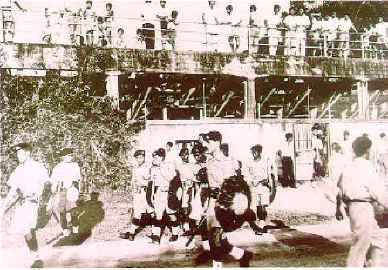
Foto:Anggota Pasukan Simpanan Persekutuan sedang mengawal rusuhan di stadium Jalan Raja Muda

Kenapa berlakunya peristiwa 13 Mei?
Tunku Abd. Rahman telah menyalahkan komunis dan anasir-anasir kongsi gelap lain yang dikatakan bertanggungjawab berlakunya peristiwa tersebut. Bagaimanapun, Tun Dr. Ismail Menteri Dalam Negeri ketika itu mengatakan bahawa demokrasi telah mati di negara ini. Demokrasi mati di tangan parti-parti politik pembangkang yang telah mendorongkan meletusnya keganasan ini. Laporan Majlis Keselamatan Negara (9 Okt. 1969) berpendapat bahawa peristiwa ini terjadi akibat peranan yang di mainkan oleh Parti Komunis Malaya dan kongsi-kongsi gelap Cina di samping beberapa faktor yang lain. Walau apa pun sebabnya peristiwa 13 Mei merupakan satu krisis perkauman yang terbesar di negara ini, yang melibatkan tiga kaum terbesar iaitu Melayu, Cina dan India. Pertelingkahan itu memakan korban yang besar iaitu seramai 196 orang mati, dan 149 orang cedera.
Isu Perkauman Dalam Pilihan raya 1969
Isu-isu perkauman yang menyentuh emosi perkauman dalam dan sentimen menjadi tema utama sepanjang kempen pilihanraya yang telah menaikkan semangat kaum-kaum di Malaysia. Semasa kempen Pilihan Raya 1969, calon-calon pilihan raya serta ahli-ahli politik terutamanya daripada parti pembangkang, telah membangkitkan soal-soal sensitif berkaitan dengan Bahasa Kebangsaan (Bahasa Melayu), kedudukan istimewa orang Melayu (Bumiputera) dan hak kerakyatan orang bukan Melayu. Hal ini telah menimbulkan perasaan perkauman dan syak wasangka. Parti Perikatan (UMNO-MCA-MIC) telah mengalami kekalahan yang teruk dalam Pilihan Raya 1969. Jumlah kerusi yang dimenanginya dalam Dewan Rakyat (Parlimen) telah menurun daripada 89 kerusi pada tahun 1964 kepada 66 kerusi pada tahun 1969. Parti Perikatan telah hilang majoriti dua-pertiga dalam Dewan Rakyat. Parti Gerakan, DAP dan PPP menang 25 buah kerusi dalam Dewan Rakyat manakala PAS menang 12 kerusi. Sebab terjadinya Peristiwa 13 Mei 1969 adalah perarakan kemenangan pihak pembangkang. Penyokong-penyokong Parti Gerakan dan DAP telah mengutuk dan menghina orang-orang Melayu semasa mengadakan perarakan di jalan-jalan raya di sekitar Kuala Lumpur.

Foto:Anggota Pasukan Simpanan Persekutuan sewaktu peristiwa 13 Mei 1969

Pembangkang meraikan kemenangan
Peristiwa ini berlaku berikutan pengumuman keputusan Pilihanraya Umum pada 10 Mei 1969.
Dr. Tan Chee Khoon dari parti Gerakan telah menang besar di kawasan Batu , Selangor. Perarakan hingga ke Jalan Campbell dan Halan Hale dan menuju ke Kampung Baharu. Sedangkan di Kampung Baru, diduduki lebih 30,000 orang Melayu yang menjadi kubu UMNO , berasa terancam dengan kemenangan pihak pembangkang. Di sini letaknya rumah Menteri Besar Selangor ketika itu , Dato' Harun Idris. Dikatakan kaum Cina yang menang telah berarak dengan mengikat penyapu kepada kenderaan mereka sebagai lambang kemenangan mereka menyapu bersih kerusi sambil melaungkan slogan . Ada pula pendapat yang mengatakan penyapu tersebut sebagai lambang mereka akan menyapu ('menyingkir') orang-orang Melayu ke laut. Dalam masyarakat Melayu penyapu mempunyai konotasi yang negatif sial. Ada yang mencaci dan meludah dari atas lori ke arah orang Melayu di tepi-tepi jalan.
Rumah Menteri Besar Selangor
UMNO telah mengadakan perarakan balas pada pagi 13 Mei 1969. Orang Melayu berkumpul di rumah Menteri Besar Selangor di Jalan Raja Muda Abdul Aziz di Kampung Baru, Kuala Lumpur . Dato' Harun Idris selaku Menteri Besar Selangor ketika itu cuba mententeramkan keadaan . Ketika berkumpul , cerita-cerita tentang kebiadapan ahli parti Gerakan dan DAP tersebar dan meluap-luap. Jam 3.00 petang datang berita kejadian pembunuhan orang Melayu di Setapak , hanya 2 km dari rumah Menteri Besar Selangor. Pemuda-pemuda Cina yang dikatakan dari PKM dan kongsi-kongsi gelap telah bertindak balas. Mereka membunuh orang-orang Melayu di sekitar Kuala Lumpur. Rupa-rupanya orang Cina dan pemuda Cina ini lengkap dengan pelbagai senjata besi , tombak dan lembing berparang di hujung. Rusuhan besar terjadi. Perintah darurat dikeluarkan, semua orang tidak boleh keluar dari rumah. Pasukan polis berkawal di sekitar Kuala Lumpur. Tentera dari Rejimen Renjer lebih awal dikerahkan menjaga keselamatan sekitar Kuala Lumpur.
Regimen Renjer
Pasukan FRU di keluarkan dari Kampung Baru dan askar dari Regimen Renjer ambil alih. Malangnya pasukan ini terdiri dari Melayu, Iban, Cina, India dan lain-lain.Pemuda-pemuda Melayu yang mempertahankan Kampung Baru dan yang lain-lain mengamuk merasakan diri mereka terkepung antara orang Cina dengan askar Regimen Renjer.
Askar Melayu
Akhirnya Regimen Renjer dikeluarkan dan digantikan dengan Askar Melayu. Beberapa bangunan rumah kedai di sekitar Kampung Baru, Jalan Tuanku Abdul Rahman masih terus terbakar. Pentadbiran diambil-alih oleh Askar Melayu.

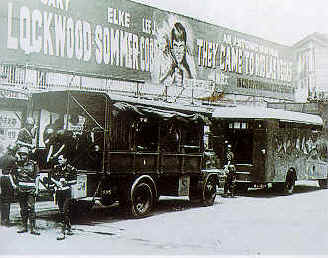
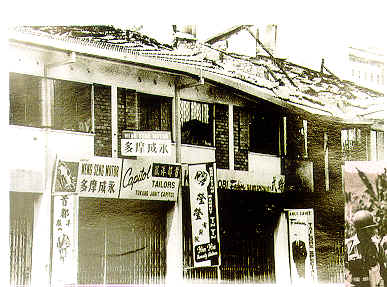
Foto:Rumah dan kedai hangus dibakar oleh penunjuk perasaan semasa peristiwa 13 Mei

Panggung Odeon
Pemuda-pemuda Cina dari kongsi-kongsi gelap telah bertindak mengepung Panggung Odeon , di Jalan Tuanku Abdul Rahman , Kuala Lumpur. Beberapa iklan disiarkan di skrin pawagam menyuruh penonton dari kalangan Cina keluar dari panggung. Iklan tersebut dalam bahasa Cina. Penonton Melayu di panggung tersebut ramai yang mati. Khabar angin mengatakan tentera Sabil dari Sungai Manik hendak datang ke Kampung Baru tetapi tersekat. Begitu juga dengan tentera selempang merah dari Muar dan Batu Pahat tersekat dan disekat oleh polis di Balai Polis Kajang dan Cheras.
Ada 4 kiai di sekitar Kampung Baharu mengedarkan air jampi dan tangkal penebat iaitu ilmu kebal . Sesiapa yang memakainya menjadi kebal dan boleh terbang-terbang. Apa yang pasti Askar Melayu sahaja yang telah menyelamatkan orang Melayu di Kampung Baru ketika itu. Namun rusuhan kaum tidak terjadi Kelantan, Terengganu dan Pahang. Di Perak , Kedah , Pulau Pinang serta Perlis tidak ada sebarang pergaduhan. Negeri Johor dan negeri Sembilan juga tidak terjadi apa-apa. Cuma ada sedikit di Melaka. Di Betong ada tembakan oleh PKM.
Angka korban
Angka rasmi menunjukkan 196 mati, 439 cedera, 39 hilang dan 9143 ditahan . 211 kenderaan musnah. Tapi spekulasi mengatakan 700 orang mati terbunuh.
Dimana Tunku
Ketika itu (13 Mei 1969) , Tunku Abdul Rahman baru pulang dari Alor Star meraikan kemenangan beliau di sana . 6.45 petang Encik Mansor selalu Ketua Polis Trafik Kuala Lumpur memaklumkan kejadian pembunuhan kepada Tunku Abdul Rahman . Darurat diisytiharkan pada jam 7.00 malam 13 Mei 1969.

Foto: Kalau tak silap ini foto Ahli Mageran termasuk Tun Hanif Omar (berdiri: 4 dari kiri) dan Dato Sri Abdullah Badawi (berdiri:1 dari kiri)

Mageran
Negara diisytiharkan darurat pada malam 16 Mei 1969 di seluruh negara dan Mageran dibentuk di bawah pentadbiran Tun Abdul Razak . Parlimen dibubarkan. Peristiwa 13 Mei 1969 menyebabkan Tunku Abdul Rahman dipersalahkan oleh orang Melayu dan Malaysia secara keseluruhannya. Berikutan itu Tunku meletakkan jawatan pada tahun 1970. Buku Malay Dilemma oleh Tun Dr Mahathir telah diharamkan. Keadaan akhirnya dapat di kawal dan beberapa keputusan telah diambil bagi mencari jalan penyelesaian termasuklah penubuhan beberapa badan seperti Majlis Perundingan Negara, Dasar Ekonomi Baru dan Rukunegara telah diciptakan. Ternyata langkah Tunku Abdul Rahman penyingkiran Singapura dari Malaysia tidak menyelesaikan masalah perkauman. Peristiwa 13 Mei 1969 merupakan kemuncak kemarahan lama orang Melayu kerana mereka miskin di tanah air mereka sendiri . Tahun 1969 pilihan raya diadakan semula dan memberi kemenangan 2/3 semula kepada kerajaan yang memerintah . Barisan Nasional dibentuk. Beberapa politikus yang dianggap berbahaya telah ditahan melalui Akta Keselamatan Dalam Negeri (ISA) . Persempadanan pilihan raya yang lebih bijaksana dan seimbang telah dilaksanakan. Sistem demokrasi , pilihan raya dan agihan kek ekonomi mendapat tafsiran semula.


Rujukan
Ramlah Adam 'Biografi Politik Tunku abdul Rahman Putra', DBP ,2004
Tunku Abdul Rahman Putra , '13 Mei - Sebelum dan Selepas'
Leon Camber ,' 13 May 1969 : A Historical Survey of Sino- Malay Relation, Heinemann Asia


source:http://ms.wikipedia.org/wiki/13_Mei , http://www.rmp.gov.my/rmp03/mei13.htm

The REAL Story of May 13 (Part 3) by Raja Petra

The REAL Story of May 13 (Part 3) This article by Raja Petra was first published in Harakah on 24 September 1999.

The move to push Tunku Abdul Rahman aside had started. They needed something to trigger off some form of resentment against the government. They needed the Malays to rise, and what better platform to exploit than a racial platform?Prior to that, 11 Chinese prisoners were sentenced to death for killing a Malay prison warden in Pudu Jail. This was subsequently turned into a Malay-Chinese issue.The Malays wanted the 11 Chinese punished. The Chinese wanted their death sentence commuted. And demonstrations were held in the Chinese dominated areas around Kuala Lumpur to pressure the government to pardon the 11. In one large demonstration outside Pudu Jail, the riot police had to be called in the break up the demonstration with teargas. That was my first experience with teargas, and I was only 19 then.The government had no choice but to back down, thereby angering the Malays.

In another incident, some Chinese demonstrated in front of the United States Information Service (USIS) office and one demonstrator was shot dead by a panicking Malay policeman -- interpreted as another Malay-Chinese thing.The Chinese wanted a funeral procession but the police would not grant them permission as they knew it would attract a huge crowd and the funeral would be turned into a demonstration instead. Tun Razak, however, told the police to grant them permission and ordered the police off the streets. The resulting "giant" parade built up tensions further.

The May 1969 General Elections were held soon after and the Alliance Party won only 40% of the votes resulting in it losing its two-thirds majority in Parliament. It also lost a couple of states to the opposition plus its two-thirds majority in others.The opposition parties held "victory parades" which turned into a mud-slinging and name-calling session. The Malays were now really angry and decided to hold a victory parade of their own. Dato Harun, the then Chief Minister of Selangor, was given the task of managing this "event".

On May 13, the entire cabinet withdrew to Frazers Hill while the Malays prepared for trouble. People in the top echelon of the government and commerce were tipped off to get out of town or go home early and, by 3.00pm, the city was quite deserted of the elite except for the unknowing rakyat.That same evening, racial riots exploded. Parliament was dissolved, thereby saving the Alliance government that no longer had a majority in Parliament, and power was transferred to Deputy Prime Minister Tun Abdul Razak under the National Operations Council (NOC).
The Tunku was now powerless.

Mahathir then increased his attacks on the Tunku using race as his platform. He also called for MCA's expulsion from the Alliance to "punish" the Chinese. Instead, Dr Mahathir was expelled from Umno as the Utusan Malaysia newspaper report of 6 June 1969 reveals:

KUALA LUMPUR 5 June - Some leading members of UMNO's Supreme Council have voiced their support for the decision by MCA leadership to exclude themselves from the Cabinet. Among them are Tan Sri Syed Jaafar Albar, Dr. Mahathir bin Mohamad and Syed Nasir bin Ismail.In a meeting with Utusan Malaysia, Tan Sri Syed Jaafar emphasised his disapproval of efforts made to ask MCA to re-enter the Cabinet."I do not agree with the way some Chinese chambers of commerce have stated their confidence and support of Tun Tan Siew Sin and their asking him to reconsider MCA's decision to withdraw from the Cabinet," he said.According to him, the problem now was not the question of confidence towards Tun Tan Siew Sin as the MCA leader, but whether the Chinese supported the present policies of the Alliance."This is the matter that should be considered by these people who are making a big fuss about giving their support to Tun Tan Siew Sin today," he added.

Tan Sri Jaafar Albar also stated that the support given to Tun Tan Siew Sin by the Chinese Chambers of Commerce was not sufficient because support had to come from the majority of the Chinese population.He stated that discussions about MCA's inclusion in the Cabinet should not be confined to the newspapers or to MCA alone because UMNO, as the backbone of the Alliance party, had not decided yet if MCA and MIC should be included in the Cabinet or if the Alliance should remain as it was then.He said: "It is not only the duty of MCA to discuss this matter as if it is its own peculiar problem, but it should be the responsibility of all the Alliance leaders from the UMNO, MCA, and MIC."However, he did not want to give his final views before the party met to discuss the matter.Mahathir, who supported Tan Sri Syed Jaafar's statement, stressed that MCA leaders had to adhere to their earlier decision of not wanting to be included in the Cabinet.
He said that he agreed with the view of MCA leaders that they could not actually represent the people they claimed to represent.According to Mahathir, the support given to Tun Tan Siew Sin by the Chinese chambers of commerce and other Chinese organisations could not be taken as support from the Chinese community as a whole to MCA because those organisations did not represent the desires of the Chinese community as a whole."If MCA wants to know whether they have the support of the Chinese, they have to wait for the next general election. Since this will take quite some time, it is no longer necessary for MCA to remain in the
Cabinet," he emphasised.

Mahathir also said that MIC's position in the Cabinet should also be reconsidered.
Syed Nasir stressed that on the whole, the relationship between UMNO, MCA and MIC had to be reviewed to take in the changes which had taken place after the general elections."The people have expressed their needs and desires, and there is little point in pretending that the policies of the Alliance party are the best acceptable to them," he said.

more on May 13

May 13 - 1969 Chinese Malay Race Riots http://www.aseannewsnetwork.com/2004/02/may-13-1969-chinese-malay-race-riots.html
The May 13 Incident is a term for the Chinese-Malay race riots in Kuala Lumpur, Malaysia on May 13, 1969 which left at least 184 people dead.
Contents
1 Causes of the Riot
2 The Singapore response
3 Repercussions of the Riot
4 Political references
5 See also

Causes of the Riot
On formation in 1963, Malaysia suffered from a sharp division of wealth between the entrepreneurial Chinese, who controlled a large portion of the Malaysian economy, and the poor, rural Malays. However, this is not to say that the Chinese controlled the largest share of the national wealth. This honour went to foreigners and colonial linked companies, who at that time held the highest percentage of the national wealth.Race riots in Singapore in 1964 were a large contributing factor in the expulsion of Singapore from Malaysia, and racial tension continued to simmer, many Malays dissatisfied by their newly independent government's perceived willingness to placate the Chinese at their expense.In the May 10, 1969 general elections, the ruling Alliance coalition headed by the United Malays National Organization (UMNO) suffered a large setback in the polls. The largely Chinese opposition Democratic Action Party and Gerakan gained in the elections, and secured a police permit for a victory parade through a fixed route in Kuala Lumpur. However, the rowdy procession deviated from its route and headed through the Malay district of Kampong Bahru, jeering at the inhabitants.While the Gerakan party issued an apology the next day, UMNO announced a counter-procession starting from the head of Selangor state Dato' Harun bin Idris on Jalan Raja Muda. Reportedly, the gathering crowd was informed that Malays on their way to the procession had been assaulted by Chinese in Setapak, several miles to the north. The angry protestors swiftly wreaked revenge by killing two passing Chinese motorcyclists, and the riot began.During the course of the riots the loudspeakers of mosques were forcefully used to urge the rioters to continue in their actions.The riot ignited the capital Kuala Lumpur and the surrounding state of Selangor, but except for minor disturbances in Melaka the rest of the country stayed calm. A nationwide state of emergency and accompanying curfew were declared on May 16 but the curfew was relaxed in most parts of the country on May 18 and not enforced even in central Kuala Lumpur within a week.According to police figures, 184 people died, 356 were wounded and many women were raped. 753 cases of arson were logged and 211 vehicles were destroyed or severely damaged. Other sources place the number of dead at 196 or even above 200. Some estimates place deaths as high as 700 as a direct result of rioting.

The Singapore response
The May 13 incident also stirred up some resentment in neighbouring Singapore. The Chinese Singaporeans, feeling unhappy about what has happened to the Malaysian Chinese in Malaysia, started some riots including arson against the Malays in Kampong Glam and Chinatown. Road blocks were later set up by the military force to prevent further violence, but the number of casualties were not as high.

Repercussions of the Riot
Immediately after the riot, the government assumed emergency powers and suspended parliament (which would not reconvene until 1971). It also suspended the press and established a National Operations Council.The riot led to the expulsion of Malay nationalist Mahathir Mohamad from UMNO and propelled him to write his seminal work The Malay Dilemma, in which he posits a solution to Malaysia's racial tensions.Tunku Abdul Rahman was toppled as Prime Minister in the ensuing UMNO power struggle, the new 'Malay-ultra' dominated government swiftly moved to placate Malays with the Malaysian New Economic Policy (NEP), enshrining affirmative action policies for the bumiputra (Malay) class. Many of Malaysia's draconian press laws, originally targeting racial encitement, also date from this period.

Political references
This incident is raised during voting years to imply consequences to the other ethnic groups of not voting for the ruling United Malays National Organization party. However, as the people who lived through the incident are replaced by post '69 citizens, there is less to be gained from such statements.In 2004, during the UMNO general assembly Badruddin Amiruldin (new deputy permanent chairman) waved a book on May 13 during his speech and stated "No other race has the right to question our privileges, our religion and our leader". He also stated that doing so would be similiar to "stirring up a hornet's nest".The next day, Dr Pirdaus Ismail (Umno Youth EXCO) was quoted as saying "Badruddin did not pose the question to all Chinese in the country," "Those who are with us, who hold the same understanding as we do, were not our target. In defending Malay rights, we direct our voice at those who question them."Deputy Internal Security Minister Noh Omar dismissed the remarks as a lesson in history and said that Badruddin was merely reminding the younger generation of the blot on the nation's history.

Saturday, May 07, 2005

my first job


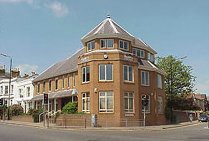
This is where I started working as a trainee Chartered Accountant back in 1989 untill 1992 in Gilberts, St Albans, Herts, England. 3 of the Senior Partners are still there including Mr Keeble who just like to undermine 3rd world countries like Malaysia with questions like this just when he just bought his new Mercedes Benz 190E (it was 1991 then!) It went on something like this.

Keeble: Muhammad, do you have Mercedes cars in Malaysia?

Me: Of course we do, we use them as taxis.
Well we do use them as taxis especially the old diesel ones. Even now we use the W124 as the Airport Limo.

Wednesday, May 04, 2005

Happy Birthday to Nuruddin


Happy Birthday to Nuruddin, you are 4 years old today

Wednesday, April 06, 2005

University of Salford


Yes I was there in Salford, 1986-1989. Didn't attend the first 3 months though, I can't understand what the lecturer was talking about, it was so foreign to me and I imagine the British would talk like how I saw them on TV (but then most Malaysian TV program were from US). Some of its famous students include Oscar-winning actor Sir Ben Kingsley,Former Manchester United and Northern Ireland footballer Norman Whiteside ,Former International rugby union player Ieuan Evans (you wouldnt know this unless you're a Wales rugby fan)

Some history of the University.... the University of Salford came to exist after a series of mergers and separations. Back in 1896, Salford Working Mens College joined forces with the Pendleton Mechanics Institute to form the Salford Technical Institute - which quickly became the Royal Technical Institute, Salford, upon being granted royal assent. The Duke and Duchess of York (later to become HRH King George V and Queen Mary) officiated at the opening ceremony. In 1921 the institute was renamed the Royal Technical College, Salford, but in 1958 it split into two separate parts. One part, the Royal College of Advanced Technology, went on to become the University of Salford in 1967. Prince Philip, the Duke of Edinburgh, was the first Chancellor. The other part, Peel Park Technical College, changed its name first to Salford Technical Institute (in 1961), then to Salford College of Technology (in 1970), and finally to University College Salford (in 1992). Finally, in 1996, simplicity won through and both organisations joined together again to form the University of Salford as it is today.


In 1989, Sarah Ferguson, yes the Duchess of York was the Chancellor and I did not receive my scroll from her. My course was NN34 BSc (Hons) Finance and Accounting. I didn't know this earlier but in my final year I found out that the degree offer full exemptions in Stage 1,2 and 3 of CIMA examinations leaving me with just the final stage which later I completed within 6 months in London.

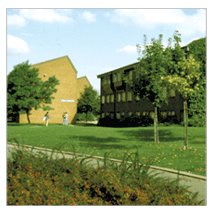
Had a good time in Castle Irwell residence for over 1,500 students, the site of the former Manchester Racecourse, situated on a meander of the River Irwell, one mile from the main University campus, a good 10 minutes walk (it was hell especially during January-February). In addition to student residences (11/12 single bedroom per unit) there are playing fields and a central block known as the Pavilion. It has a large bar and disco facilities. At that time the training ground for Man Utd was across the river from Castle Irwell, I remember watching Viv Anderson and Bryan Robson in training.

Best thing about Salford is that it is just a stone throw away from OLD TRAFFORD. O yes Manchester United FC.

GoogleAd

LinkWithin

Related Posts Plugin for WordPress, Blogger...